

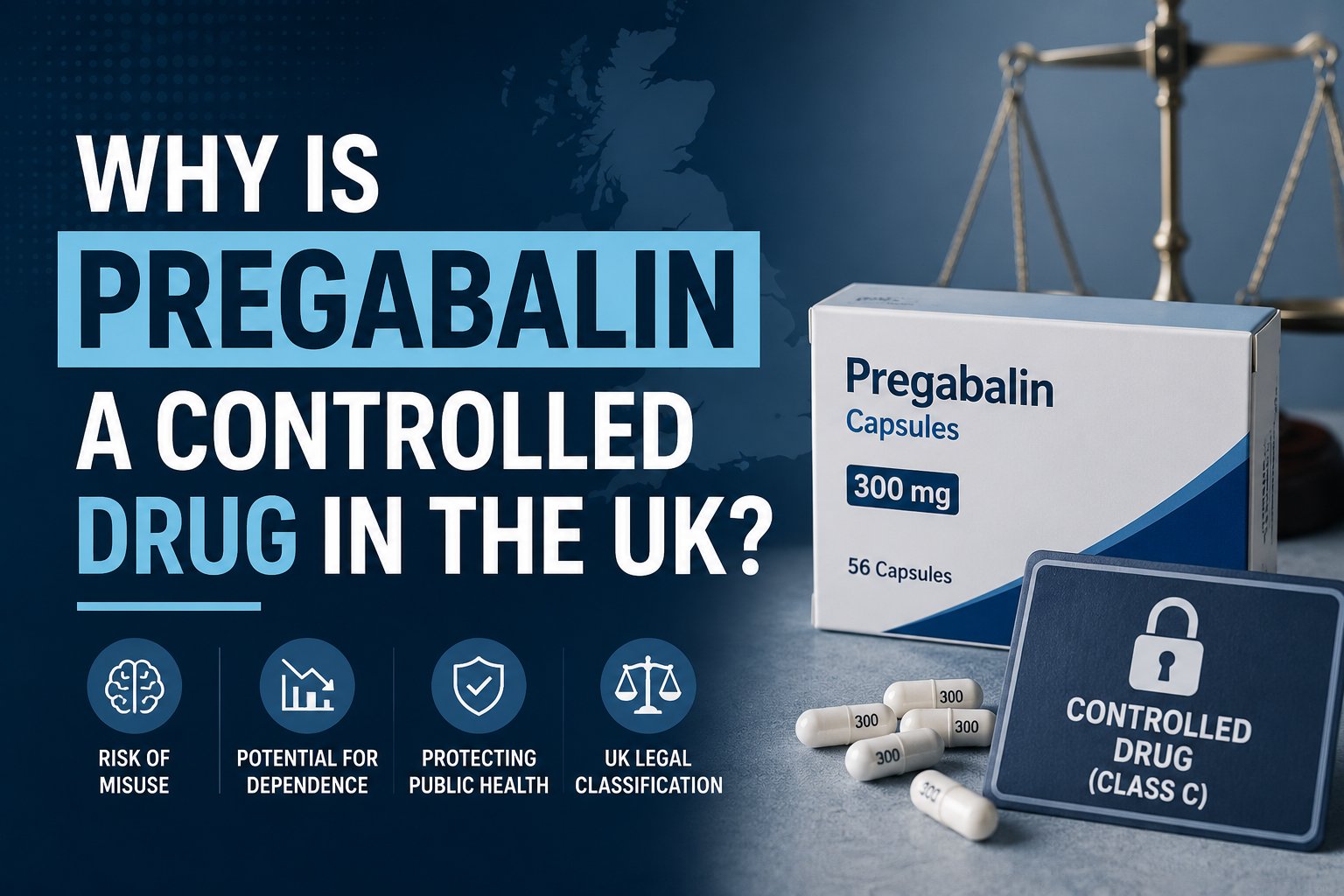
Why Is Pregabalin a Controlled Drug in the UK? Everything You Need to Know
If you have been prescribed Pregabalin or are researching it as a treatment option, you may have come across the term “controlled drug” and found yourself wondering what that actually means and why Pregabalin is categorised this way in the UK. It is a question that many patients, carers, and healthcare professionals have asked, and one that deserves a thorough, honest answer.
Understanding why Pregabalin was reclassified as a controlled drug, what that classification means in practice, and how it affects your ability to access the medication legally is not just useful knowledge it is essential for anyone who depends on Pregabalin as part of their treatment plan. This blog covers it all.
A Brief History: Pregabalin Before the Change
Pregabalin was first approved in the UK under the brand name Lyrica in 2004. For over a decade, it was available as a standard prescription-only medication (POM), but it was not classified as a controlled drug. It was widely prescribed for neuropathic pain, epilepsy, generalised anxiety disorder (GAD), and fibromyalgia, and it became one of the most commonly issued prescriptions in NHS England.
However, by the mid-2010s, a significant and growing body of evidence began to emerge — both from NHS data and from clinical reports — that Pregabalin and its closely related cousin Gabapentin were being misused at alarming rates. Reports of recreational use, diversion from prescribed supplies, and deaths where these drugs were implicated rose steadily year on year.
This prompted the UK government and the Advisory Council on the Misuse of Drugs (ACMD) to conduct a comprehensive review. The conclusion was clear: the classification of Pregabalin needed to change.
When Did Pregabalin Become a Controlled Drug in the UK?
On 1st April 2019, Pregabalin (along with Gabapentin) was formally reclassified as a Class C controlled drug under the Misuse of Drugs Act 1971 and added to Schedule 3 of the Misuse of Drugs Regulations 2001 in the United Kingdom.
This was a landmark change that significantly altered the way Pregabalin is prescribed, dispensed, and handled across all settings in the UK — from GP surgeries and hospitals to community pharmacies and online platforms.
What Does “Class C, Schedule 3” Actually Mean?
Understanding the UK’s drug classification system helps put Pregabalin’s status in full context. The UK uses two parallel frameworks for controlled drugs:
The Misuse of Drugs Act 1971 – Class A, B, and C: This classifies substances based on the potential harm they pose to individuals and society, and determines the severity of criminal penalties for illegal possession or supply. Class A carries the most severe penalties; Class C the least severe — but Class C still carries real legal consequences. Pregabalin, as a Class C drug, means:
- Illegal possession can result in up to 2 years in prison and/or an unlimited fine.
- Illegal supply or production can result in up to 14 years in prison and/or an unlimited fine.
The Misuse of Drugs Regulations 2001 – Schedules 1 to 5: This framework determines how controlled drugs may be used medicinally. Schedules range from Schedule 1 (no accepted medical use, tightest controls) to Schedule 5 (lowest level of control). Pregabalin sits in Schedule 3, which means:
- It can be prescribed and dispensed for legitimate medical purposes.
- Prescriptions must meet specific legal requirements (more on this below).
- Pharmacies must keep records of all Schedule 3 drugs dispensed.
- Safe custody requirements apply in most settings.
In practical terms, Schedule 3 is the same classification as other well-known medications including Temazepam and Buprenorphine — drugs with recognised therapeutic value but a documented risk of misuse.
Why Was Pregabalin Made a Controlled Drug? The Evidence Behind the Decision
The reclassification was not made lightly or arbitrarily. It was driven by a substantial weight of evidence from multiple sources:
Rising Deaths Involving Pregabalin: Data from the Office for National Statistics (ONS) showed a dramatic increase in deaths involving Pregabalin throughout the 2010s. In England and Wales, fatalities where Pregabalin was mentioned on the death certificate rose from just a handful in 2012 to several hundred annually by 2018. Many of these deaths also involved other central nervous system depressants — particularly opioids, alcohol, and benzodiazepines — highlighting the dangerous synergistic effects of combining Pregabalin with other substances.
Widespread Recreational Misuse: Pregabalin’s ability to produce feelings of euphoria, relaxation, and disinhibition at higher doses made it attractive for non-medical use. It became known by street names and was commonly sold or shared outside the medical supply chain. This was particularly prominent in areas with high levels of substance misuse, including parts of Scotland, Northern Ireland, and deprived urban communities in England.
Diversion from Prescriptions: Because Pregabalin was not a controlled drug prior to 2019, it was relatively easy to obtain through repeated prescriptions or from multiple sources. There was a significant problem with patients obtaining larger quantities than needed and diverting the excess into illicit use.
Dependency and Withdrawal: Clinical evidence confirmed that Pregabalin carries a risk of physical and psychological dependence, particularly at higher doses or with prolonged use. Abrupt discontinuation was found to cause significant withdrawal symptoms — including anxiety, insomnia, nausea, and seizures — similar in character to those seen with benzodiazepine withdrawal.
ACMD Recommendations: The Advisory Council on the Misuse of Drugs formally recommended reclassification based on this evidence, and the government accepted those recommendations in full.
How the Controlled Drug Status Affects Prescribing
The reclassification has had a direct and meaningful impact on how Pregabalin is prescribed and dispensed across the UK. Key changes include:
Prescription Requirements: Pregabalin prescriptions must now comply with controlled drug prescription writing requirements. This means the prescription must be handwritten or generated by a specific approved electronic prescribing system, signed by the prescriber, and include the patient’s full name and address, the drug’s form and strength, and the total quantity in words and figures.
Maximum Supply Period: Pregabalin prescriptions are typically limited to a 30-day supply at a time, preventing large quantities from being accumulated and potentially diverted.
Repeat Prescriptions: Unlike standard medications, Pregabalin cannot be issued on a standard NHS repeat prescription system in the same way. Each prescription must be individually authorised and signed by the prescribing doctor.
No Telephone or Fax Prescriptions: Schedule 3 controlled drugs cannot be prescribed verbally or by fax in the UK. A valid written or electronic prescription must be present at the time of dispensing.
Pharmacy Record-Keeping: All pharmacies dispensing Pregabalin must now maintain detailed dispensing records as part of their controlled drugs register, subject to inspection by regulatory authorities.
Does the Controlled Drug Status Affect Patients Legitimately Prescribed Pregabalin?
For the vast majority of patients who use Pregabalin exactly as prescribed for genuine medical conditions, the reclassification makes very little practical difference to day-to-day treatment. You can still be prescribed Pregabalin by your GP or specialist. You can still collect it from a pharmacy. You can still use it safely and effectively as part of your treatment plan.
The main differences patients may notice are:
- Prescriptions are issued more frequently in smaller quantities (typically monthly rather than every two or three months).
- The prescription process is slightly more involved for GPs to complete.
- You may need to collect prescriptions more regularly rather than using a standard repeat prescription service.
None of these changes should prevent any patient with a genuine medical need from accessing Pregabalin. They are administrative safeguards designed to reduce misuse, not to restrict legitimate medical access.
Can You Still Buy Pregabalin Online Legally in the UK?
Yes but only with a valid prescription and only through a legitimate, regulated pharmacy or pharmacy partner. The controlled drug classification does not make it illegal to purchase Pregabalin; it makes it illegal to do so without a valid prescription or through channels that do not comply with UK pharmaceutical regulations.
Platforms like Pregabalin Shop operate within this framework by partnering with verified, licensed pharmacies that process and review valid prescriptions before any order is fulfilled. This ensures that patients can benefit from the convenience of online ordering and next day delivery without any compromise on legality, safety, or compliance with UK controlled drug regulations.
Every order placed through Pregabalin Shop is reviewed, verified, and dispensed in full compliance with the legal requirements governing Schedule 3 controlled drugs in the UK giving patients both peace of mind and fast, discreet access to the medication they need.
Pregabalin and the Risks of Misuse — What Patients Should Know
For patients taking Pregabalin as prescribed, it is equally important to understand the risks associated with misuse, both for your own safety and to help protect those around you:
Never share your prescription medication. Giving Pregabalin to someone who has not been prescribed it is a criminal offence under UK law.
Follow your prescribed dose exactly. Increasing your dose without medical guidance raises the risk of dependence, adverse effects, and withdrawal complications.
Avoid combining with alcohol or opioids. The combination of Pregabalin with central nervous system depressants significantly increases the risk of respiratory depression and overdose — this combination is implicated in a large proportion of Pregabalin-related deaths.
Do not stop suddenly. Always taper your dose gradually under medical supervision. Abrupt cessation can cause serious withdrawal effects.
Store medication securely. Keep Pregabalin in a safe, secure location and dispose of any unused medication through a pharmacy take-back scheme rather than discarding it.
The Bigger Picture: Responsible Access to a Genuinely Valuable Medication
It is important to close with a clear perspective: Pregabalin’s status as a controlled drug reflects the need for careful oversight — it does not reflect a judgment about patients who rely on it for genuine medical conditions. Pregabalin remains one of the most effective medications available for neuropathic pain, fibromyalgia, epilepsy, and anxiety, and it continues to improve quality of life for hundreds of thousands of patients across the UK every single day.
The controlled drug framework exists to protect society from misuse, not to stigmatise those who need legitimate treatment. Responsible prescribing, responsible dispensing, and responsible use are all that is required to continue accessing this important medication safely and lawfully.
At Pregabalin Shop, all products are supplied through verified, licensed pharmacy partners in full compliance with UK controlled drug regulations. Whether you need Pregabalin 75mg, 150mg, 300mg, or 450mg capsules, or the combined Pregabalin & Methylcobalamin formulation for nerve support, you can browse the full range, place a secure order, and receive fast, discreet next day delivery across the UK all within the legal framework that protects both patients and the wider public.
Visit www.pregabalinshop.com to learn more about the products available and to get in touch with the 24/7 support team.
Disclaimer: This blog is intended for informational and educational purposes only and does not constitute legal or medical advice. Pregabalin is a prescription-only controlled drug in the UK. Always consult a qualified healthcare professional before starting, changing, or stopping any medication. Ensure you hold a valid prescription before purchasing Pregabalin from any source.