

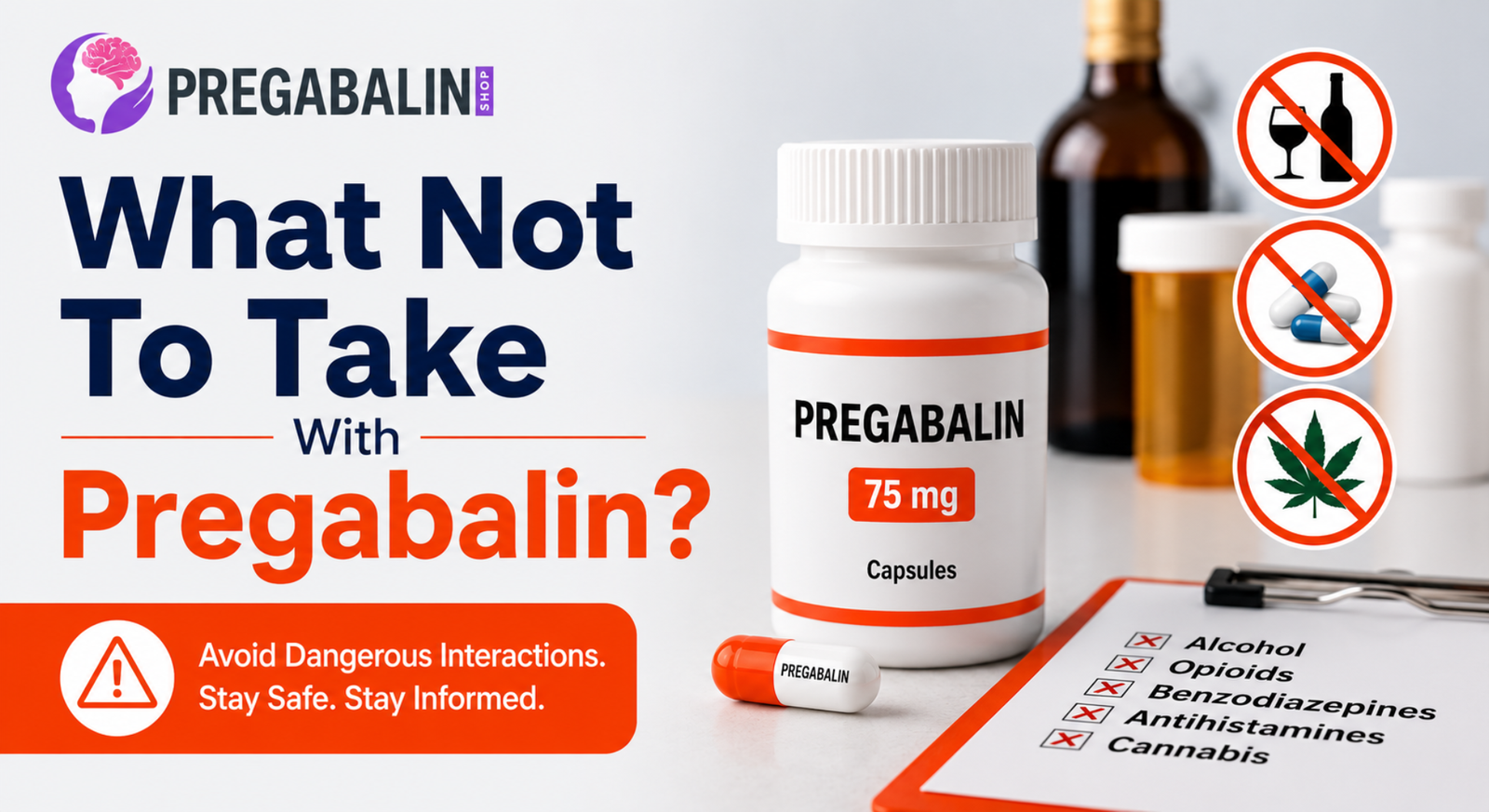
What Not to Take with Pregabalin ? – Drug Interactions, Risks & Safety Guide
Pregabalin is one of the most widely prescribed medications in the UK for nerve pain, epilepsy, fibromyalgia, and generalised anxiety disorder. When used correctly and as prescribed, it is a highly effective and well-tolerated treatment. However, like all medications particularly those that act on the central nervous system Pregabalin carries a number of important interaction risks that every patient needs to be aware of.
Knowing what not to take with Pregabalin is not just about avoiding minor side effects. In some cases, combining Pregabalin with certain drugs, alcohol, or even specific foods can have serious and potentially life-threatening consequences. This guide covers the full picture: every significant drug interaction, the substances and combinations most likely to cause harm, and the practical steps you can take to protect yourself and get the most from your treatment.
If you are currently prescribed Pregabalin or are considering it as a treatment option, always discuss your full medication list with your doctor or pharmacist before starting. And if you are looking for a reliable, regulated source to buy Pregabalin online in the UK, Pregabalin Shop offers a comprehensive range of dosages with verified, discreet next day delivery.
Why Drug Interactions with Pregabalin Matter
Pregabalin works by binding to voltage-gated calcium channels in the central nervous system, reducing the release of excitatory neurotransmitters and thereby calming overactive or damaged nerve signals. This mechanism makes it highly effective for pain and anxiety but it also means that any substance that similarly depresses or disrupts the central nervous system can compound Pregabalin’s effects in unpredictable and dangerous ways.
The UK’s reclassification of Pregabalin as a Class C, Schedule 3 controlled drug in 2019 was partly driven by data showing that many of the deaths and serious adverse events involving Pregabalin occurred when it was taken in combination with other CNS depressants. The interaction risk is real, documented, and consistently underestimated.
Alcohol – One of the Most Dangerous Combinations
Alcohol is, without question, the most commonly encountered and most dangerous substance to combine with Pregabalin. Both are central nervous system depressants, and their effects are synergistic meaning that together, they produce a combined effect far greater than either would alone.
When taken together, Pregabalin and alcohol can cause:
- Severe drowsiness and sedation that impairs judgement and coordination
- Dangerously slowed breathing (respiratory depression)
- Loss of consciousness
- Increased risk of falls and accidents
- Significantly impaired cognitive function and memory
- In severe cases, fatal respiratory failure
This is not a combination where “a small amount” can be considered safe. Even modest alcohol consumption while taking Pregabalin can significantly impair your ability to drive, operate machinery, or respond quickly in an emergency. Patients prescribed Pregabalin are strongly advised to avoid alcohol entirely, or at minimum to discuss any alcohol use honestly with their prescribing doctor.
Read More:- Maximum Pregabalin Dose for Neuropathic Pain
Opioid Painkillers – A Frequently Deadly Combination
Opioids — including codeine, tramadol, morphine, oxycodone, fentanyl, and buprenorphine are among the most commonly co-prescribed medications with Pregabalin, and also among the most dangerous combinations. Both drug classes cause CNS and respiratory depression, and their combination dramatically increases the risk of breathing complications and overdose.
NHS data and coroner reports have repeatedly highlighted the Pregabalin-opioid combination as a factor in a significant proportion of drug-related deaths across the UK. The risk is not theoretical it is one of the primary drivers behind Pregabalin’s reclassification as a controlled substance.
Specific risks of combining Pregabalin with opioids include:
- Profound respiratory depression slowed or stopped breathing
- Extreme sedation and unresponsiveness
- Overdose, including fatal overdose
- Increased risk when doses of either drug are changed
If you are prescribed both Pregabalin and an opioid painkiller, your doctor should be closely monitoring this combination, using the lowest effective doses of each, and reviewing the need for both drugs regularly. Never increase either dose without explicit medical guidance.
Benzodiazepines and Sleeping Tablets
Benzodiazepines — including diazepam (Valium), lorazepam, temazepam, alprazolam, and clonazepam — are another class of CNS depressants that interact dangerously with Pregabalin. Similarly, Z-drugs (zopiclone, zolpidem) prescribed for insomnia carry the same risks.
The combination of Pregabalin with benzodiazepines or sleeping tablets can lead to:
- Excessive and prolonged sedation
- Severe respiratory depression
- Memory impairment and confusion, particularly in older patients
- Increased fall risk and serious injury
- Compounding of dependence and withdrawal risks
The Medicines and Healthcare products Regulatory Agency (MHRA) has issued warnings about the co-prescribing of Pregabalin with benzodiazepines, and many GP guidelines now specifically flag this combination for careful review. If you are taking both, speak with your doctor about whether the combination is still necessary and what monitoring is in place.
Antidepressants – Mixed Picture, Important Nuances
The interaction between Pregabalin and antidepressants depends significantly on the specific antidepressant in question.
Tricyclic antidepressants (TCAs) — such as amitriptyline, nortriptyline, and dosulepin — carry additive sedative effects when combined with Pregabalin. Both increase CNS depression, and together they can cause excessive drowsiness, cognitive impairment, and increased fall risk, particularly in older patients.
SNRIs (serotonin-norepinephrine reuptake inhibitors) — including duloxetine and venlafaxine — are frequently co-prescribed alongside Pregabalin, particularly for neuropathic pain or fibromyalgia. While this combination is clinically used and can be appropriate, it requires careful dose management and monitoring, as it can increase the risk of dizziness and sedation.
SSRIs (selective serotonin reuptake inhibitors) — such as sertraline, fluoxetine, and citalopram — have a more limited direct pharmacological interaction with Pregabalin, though increased sedation and dizziness remain possibilities. The combination is generally considered lower risk but should still be discussed with your prescriber.
The key principle is: never add or change any antidepressant while taking Pregabalin without first consulting your doctor, even if the new medication is being obtained over the counter or from a separate provider.
Gabapentin – Do Not Take Together
Gabapentin (brand names Neurontin, Horizant) and Pregabalin are both gabapentinoids — they work through the same mechanism and act on the same receptor type. Taking them together does not double the therapeutic benefit; it dramatically increases the risk of adverse effects and toxicity.
The combination of Pregabalin and Gabapentin can cause:
- Severe sedation and drowsiness
- Respiratory depression
- Pronounced dizziness and loss of coordination
- Increased risk of falls and injury
- Heightened dependence risk
There is no clinical indication for which both drugs would be prescribed simultaneously. If you are ever advised to take both by different healthcare providers, flag this immediately and seek clarification — this is almost certainly an error or a failure of communication between prescribers.
Antihistamines and Cold Remedies
Many over-the-counter antihistamines — particularly older-generation (first-generation) ones such as diphenhydramine, chlorphenamine (Piriton), and promethazine — have significant sedative properties. When combined with Pregabalin, they can cause excessive drowsiness, impaired coordination, and confusion.
Patients taking Pregabalin should be cautious with:
- Drowsy antihistamines (found in many hay fever and allergy treatments)
- Night-time cold and flu remedies that contain sedating antihistamines
- OTC sleeping aids that contain diphenhydramine or similar ingredients
Non-drowsy antihistamines such as loratadine or cetirizine carry a much lower sedation risk and are generally more appropriate for patients on Pregabalin. Always check the label and ask your pharmacist if you are unsure.
Muscle Relaxants
Muscle relaxants including baclofen, methocarbamol, and tizanidine all act on the central nervous system and can compound the sedative and motor-impairing effects of Pregabalin. Patients taking this combination may experience extreme drowsiness, significant balance difficulties, and impaired ability to drive or operate machinery safely.
Antacids Containing Aluminium or Magnesium
This is a less well-known but clinically relevant interaction. Antacids containing aluminium or magnesium hydroxide — such as Gaviscon or similar preparations — can reduce the absorption of Pregabalin when taken at the same time, potentially reducing its effectiveness.
The practical recommendation is to take Pregabalin at least two hours before or after aluminium- or magnesium-containing antacids to ensure consistent absorption and therapeutic effect.
Foods and Dietary Considerations
Food does not significantly alter the overall absorption of Pregabalin, but it can affect the rate at which it is absorbed. Taking Pregabalin with a high-fat meal may slow down the rate of absorption, slightly delaying the onset of effect. This is not usually clinically significant, but patients who need rapid symptom relief may prefer to take their dose on an empty stomach or with a light meal.
More importantly, grapefruit — a well-known inhibitor of certain liver enzymes — does not have a significant documented interaction with Pregabalin in the same way it does with some statins or calcium channel blockers. However, avoiding grapefruit as a general principle when on multiple medications is a reasonable precaution to discuss with your pharmacist.
Driving and Operating Machinery
While not a drug interaction in the traditional sense, it is worth addressing directly: Pregabalin itself causes dizziness and drowsiness in a proportion of patients, and these effects are significantly amplified by any of the combinations discussed above. Patients taking Pregabalin should assess their individual response carefully before driving, and should absolutely avoid driving if they are also taking opioids, benzodiazepines, alcohol, or sedating antihistamines alongside it.
Under UK law, driving whilst impaired by prescription medication — even when taken as prescribed — can be a criminal offence if it impairs your ability to drive safely.
Frequently Asked Questions (FAQs)
Q1: Can I drink alcohol while taking Pregabalin?
No. Alcohol and Pregabalin are both central nervous system depressants, and combining them can cause severe sedation, respiratory depression, and in serious cases, fatal breathing failure. Patients prescribed Pregabalin are strongly advised to avoid alcohol completely.
Q2: Is it safe to take Pregabalin with codeine or tramadol?
This combination is considered high risk. Both Pregabalin and opioids such as codeine and tramadol cause respiratory depression, and together they significantly increase the risk of overdose. If both are prescribed, this should be under close medical supervision with the lowest possible doses of each.
Q3: Can I take paracetamol with Pregabalin?
Yes, paracetamol (acetaminophen) does not have a significant pharmacological interaction with Pregabalin and is generally considered safe to take alongside it at recommended doses. Always follow dosing guidelines for both.
Q4: What happens if I take Pregabalin and Gabapentin together?
Taking Pregabalin and Gabapentin together is not recommended. Both drugs work through the same mechanism and the combination significantly increases the risk of side effects including severe sedation, dizziness, and respiratory depression, without any additional therapeutic benefit.
Q5: Are there any foods I should avoid while taking Pregabalin?
There are no specific foods proven to cause dangerous interactions with Pregabalin. However, high-fat meals may slow absorption slightly, and some practitioners advise caution with grapefruit when taking multiple medications. Taking Pregabalin with antacids containing aluminium or magnesium at the same time may reduce its absorption — space them at least two hours apart.
Q6: Can I take ibuprofen or anti-inflammatory tablets with Pregabalin?
NSAIDs such as ibuprofen or naproxen do not have a major direct pharmacological interaction with Pregabalin. However, long-term use of NSAIDs carries its own risks, particularly for the kidneys, and Pregabalin itself is renally excreted — so patients with kidney concerns should discuss NSAID use with their doctor.
Q7: Can I take Pregabalin with antidepressants?
It depends on the antidepressant. Tricyclic antidepressants carry additive sedation risks. SNRIs can be used alongside Pregabalin clinically but require careful monitoring. SSRIs are generally lower risk but should still be discussed with your prescribing doctor. Never combine medications without medical guidance.
Q8: How do I know if my other medications interact with Pregabalin?
The safest step is to provide your doctor or pharmacist with a full list of every medication, supplement, and over-the-counter product you take. They can conduct a comprehensive drug interaction check and advise accordingly. Never assume a new medication is safe to add without checking first.
Author / Written By: Dr. Andrew
Post Uploaded Date: May 21, 2026
Last Updated Date: May 21, 2026
Reading Time: 8 min read
Medical Disclaimer
This blog is intended for informational and educational purposes only and does not constitute medical advice. Always consult a qualified healthcare professional before starting, changing, or stopping any medication. If you are concerned about a potential drug interaction, contact your GP, pharmacist, or NHS 111 immediately.