

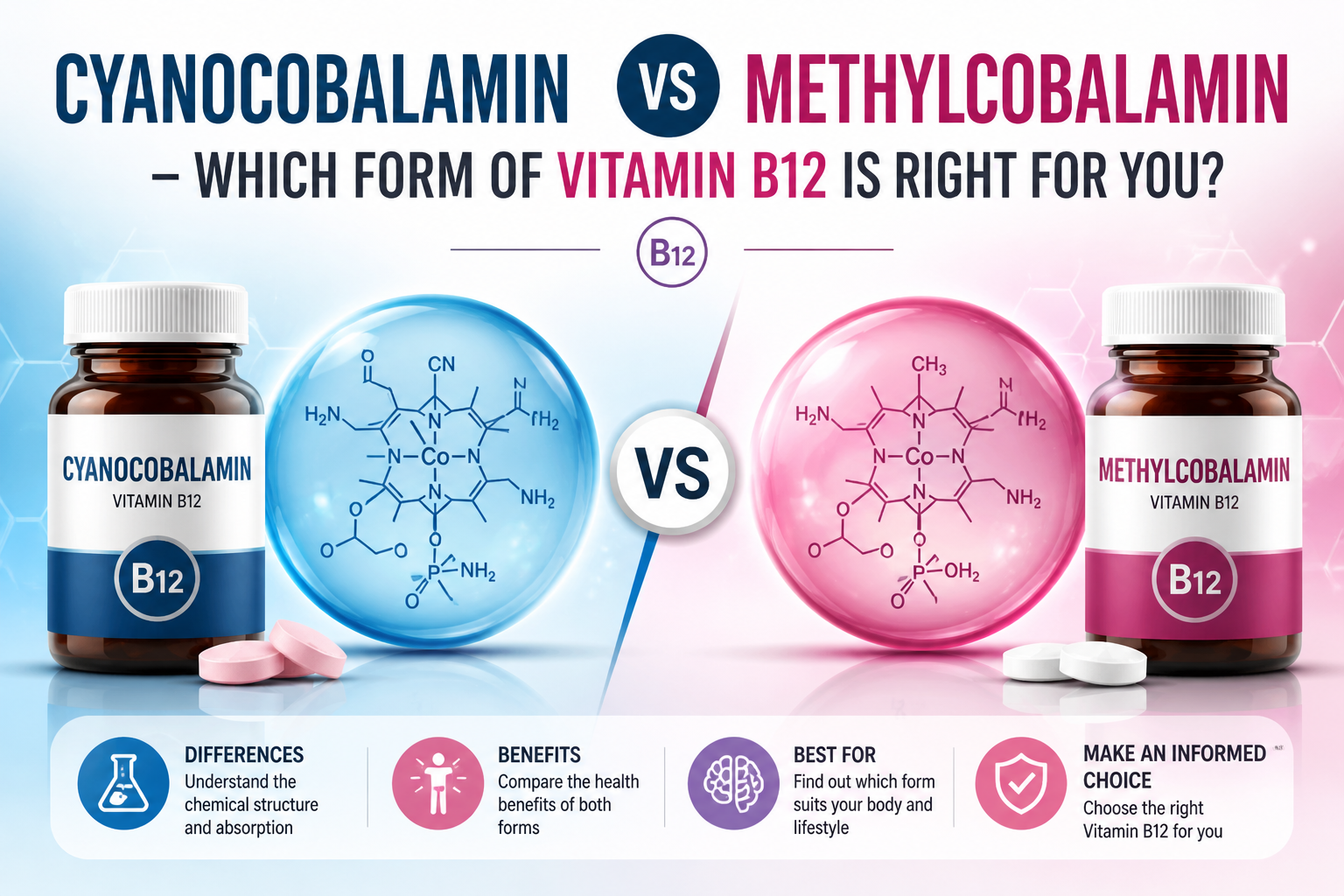
Cyanocobalamin vs Methylcobalamin – What’s the Difference and Which One Should You Take?
Vitamin B12 is one of the most essential nutrients your body needs to function properly. It plays a critical role in red blood cell formation, neurological function, DNA synthesis, and energy metabolism. Yet despite being widely discussed, one of the most common sources of confusion around B12 is the form it comes in. Walk into any pharmacy or health food store and you will find products labelled either cyanocobalamin or methylcobalamin and for most people, the difference is completely unclear.
This blog breaks down exactly what sets these two forms apart, which one is more bioavailable, and why the distinction matters especially for people managing nerve pain, neuropathy, or conditions that benefit from Pregabalin combined with B12 support.
What Is Vitamin B12 and Why Does It Matter?
Before comparing the two forms, it helps to understand what Vitamin B12 actually does in the body. B12 is a water-soluble vitamin that your body cannot produce on its own — it must come entirely from food or supplementation. It is found naturally in animal products such as meat, fish, eggs, and dairy, which is why deficiency is particularly common among vegans, vegetarians, and older adults.
A deficiency in Vitamin B12 can lead to a wide range of symptoms, including:
- Persistent fatigue and weakness
- Numbness or tingling in the hands and feet
- Memory problems and difficulty concentrating
- Mood disturbances including depression and irritability
- Balance problems and unsteady gait
- Pale or jaundiced skin
- Nerve damage (peripheral neuropathy)
Left untreated, B12 deficiency can cause irreversible neurological damage. This is why choosing the right form — and the right dose — of B12 supplementation is so important, particularly for patients already dealing with neuropathic pain or nerve-related conditions.
What Is Cyanocobalamin?
Cyanocobalamin is the most commonly found and most widely manufactured form of Vitamin B12 in supplements. It is a synthetic form of B12 — meaning it does not occur naturally in the human body or in food sources. The “cyano” in its name refers to a cyanide molecule attached to the cobalamin structure.
Before your body can actually use cyanocobalamin, it must first convert it into one of B12’s active forms — either methylcobalamin or adenosylcobalamin. This conversion process requires an additional metabolic step that not everyone can perform efficiently, particularly people with certain genetic variants such as MTHFR mutations, which affect the body’s ability to metabolise certain nutrients.
Key characteristics of cyanocobalamin:
- Synthetic, laboratory-produced form of B12
- Highly stable and inexpensive to manufacture
- Widely available in supplements and fortified foods
- Requires conversion to become biologically active
- Contains a trace cyanide molecule, which the body must process and excrete
- Less suitable for individuals with kidney problems or detoxification issues
- Generally effective for correcting B12 deficiency in healthy individuals
Despite its synthetic nature, cyanocobalamin has been used safely for decades in standard B12 injections and supplements, and it remains highly effective for many people. However, it is not the most direct or efficient route to B12 activity in the body.
What Is Methylcobalamin?
Methylcobalamin is a naturally occurring, biologically active form of Vitamin B12. Unlike cyanocobalamin, it does not need to be converted before your body can use it — it is already in the form that cells can directly utilise. This makes it inherently more bioavailable and more readily absorbed, particularly in tissues with high metabolic demand such as the brain, nervous system, and spinal cord.
Methylcobalamin is the form of B12 that is predominantly found in human blood and cerebrospinal fluid. It is also the form that plays the most direct role in protecting and regenerating nerve tissue — a function that has made it increasingly valuable in the management of peripheral neuropathy and nerve-related conditions.
Key characteristics of methylcobalamin:
- Natural, bioactive form of B12 found in the human body
- Does not require metabolic conversion — immediately usable by cells
- Higher bioavailability, particularly in neurological tissue
- Directly supports myelin sheath repair and nerve regeneration
- Preferred form for patients with neuropathic conditions
- Better retained in body tissues compared to cyanocobalamin
- No cyanide component — a cleaner option for those with detoxification concerns
- More expensive to produce, but increasingly widely available
Read More :- Pregabalin Max Dose for Adults in the UK
Cyanocobalamin vs Methylcobalamin – A Direct Comparison
| Feature | Cyanocobalamin | Methylcobalamin |
|---|---|---|
| Form | Synthetic | Natural / Bioactive |
| Conversion Required | Yes | No |
| Bioavailability | Moderate | High |
| Nerve Support | Indirect | Direct |
| Tissue Retention | Lower | Higher |
| Cost | Lower | Slightly higher |
| Cyanide Component | Yes (trace) | No |
| Best For | General B12 deficiency | Neuropathy, nerve repair |
| Stability | Very stable | Less stable (light-sensitive) |
Which Form Is Better for Nerve Health?
When it comes specifically to nerve health and neuropathic conditions, methylcobalamin has a clear advantage. Multiple studies have highlighted its role in supporting the nervous system in ways that cyanocobalamin simply cannot replicate as efficiently.
Myelin Sheath Protection: The myelin sheath is the protective coating around nerve fibres that allows electrical signals to travel efficiently. Damage to the myelin sheath — caused by diabetes, injury, or inflammation — leads to the burning, tingling, and numbness characteristic of neuropathic pain. Methylcobalamin has been shown to actively support myelin synthesis and help repair damaged myelin, making it a crucial nutrient for anyone dealing with nerve damage.
Nerve Regeneration: Methylcobalamin has demonstrated the ability to promote nerve cell regeneration, a process known as axonal regrowth. This makes it particularly valuable for conditions like diabetic peripheral neuropathy, where nerve damage is ongoing and progressive.
Direct Central Nervous System Action: Because methylcobalamin crosses the blood-brain barrier more efficiently than cyanocobalamin, it has a more immediate impact on the central nervous system — supporting cognitive function, mood regulation, and neurological health at a deeper level.
Reduced Homocysteine: Both forms help reduce homocysteine, an amino acid linked to cardiovascular and neurological damage when elevated. However, methylcobalamin performs this function more directly as part of the methylation cycle, which is central to overall cellular health.
For patients managing chronic nerve pain or taking Pregabalin for neuropathic conditions, combining treatment with methylcobalamin supplementation may offer meaningful additional support for nerve tissue — addressing the underlying nutritional needs of the nervous system alongside pharmaceutical pain management.
Pregabalin and Methylcobalamin – A Powerful Combination
This is where the connection to Pregabalin becomes particularly relevant. Pregabalin works by calming overactive nerve signals — reducing the intensity of pain messages reaching the brain. It is highly effective for symptom management. However, it does not directly repair or regenerate damaged nerve tissue.
Methylcobalamin complements Pregabalin by working at a different level — actively supporting the health, structure, and regeneration of nerve cells. Together, this combination addresses both the symptomatic relief of neuropathic pain and the longer-term nutritional support that nerves need to heal and function optimally.
This is why Pregabalin and Methylcobalamin combination capsules have become an increasingly popular and widely prescribed option for patients with diabetic neuropathy, peripheral nerve damage, and other chronic neuropathic conditions. Rather than addressing symptoms alone, this combination targets the condition from two complementary angles — making it a more holistic approach to nerve care.
At Pregabalin Shop, Pregabalin & Methylcobalamin Capsules IP are available in both 75mg and standard doses, providing an accessible and affordable way to access this dual-action support in a single convenient capsule.
Who Should Consider Methylcobalamin Over Cyanocobalamin?
While cyanocobalamin remains a valid and widely used option for general B12 supplementation, there are specific groups of people for whom methylcobalamin is the clearly superior choice:
People with neuropathic pain or nerve damage will benefit from methylcobalamin’s direct nerve-supportive properties, including myelin repair and axonal regeneration.
Patients taking Pregabalin for nerve pain or fibromyalgia may find that adding methylcobalamin provides additional support that works alongside their medication rather than simply duplicating it.
Individuals with MTHFR gene mutations cannot efficiently convert cyanocobalamin to active B12, making the pre-converted methylcobalamin form essential for them.
Vegans and vegetarians who rely entirely on supplementation for their B12 intake will benefit from the higher bioavailability and tissue retention of methylcobalamin.
Older adults whose ability to absorb B12 diminishes with age will find methylcobalamin more efficiently absorbed and utilised.
People with kidney disease or detoxification concerns may prefer to avoid the trace cyanide component in cyanocobalamin, making methylcobalamin the safer alternative.
Practical Tips for B12 Supplementation
Regardless of which form you choose, here are some key pointers for getting the most from your B12 supplementation:
- Take B12 with food to support absorption through the digestive process.
- Sublingual (under the tongue) methylcobalamin absorbs particularly well, bypassing the need for intrinsic factor in the stomach — useful for those with absorption difficulties.
- Store methylcobalamin away from direct light, as it is more light-sensitive than cyanocobalamin.
- Discuss with your doctor before starting any new supplement, particularly if you are already taking prescription medications such as Pregabalin.
- Regular blood tests can help monitor your B12 levels and ensure your supplementation is working effectively.
Final Thoughts
Both cyanocobalamin and methylcobalamin have a legitimate place in B12 supplementation, and neither should be dismissed outright. However, the evidence is clear: for individuals dealing with nerve pain, neuropathy, or conditions that affect the nervous system, methylcobalamin is the superior choice. Its direct bioavailability, nerve-regenerating properties, and natural compatibility with the body’s own biology make it the B12 of choice for neurological health.
When combined with a prescribed Pregabalin regimen, methylcobalamin offers patients a more complete approach to managing neuropathic conditions — one that treats symptoms effectively while also giving the nervous system the nutritional building blocks it needs to repair and recover.
For those interested in exploring Pregabalin and Methylcobalamin combination capsules, Pregabalin Shop offers a trusted, affordable, and discreetly delivered solution. Visit www.pregabalinshop.com to browse the full range and speak with the support team about finding the right option for your needs.
Disclaimer: This blog is intended for informational purposes only and does not constitute medical advice. Always consult a qualified healthcare professional before starting, changing, or stopping any medication or supplement.
Read More :- Buy Pregabalin Next Day Delivery UK – Your Complete Guide to Safe, Fast & Affordable Access