

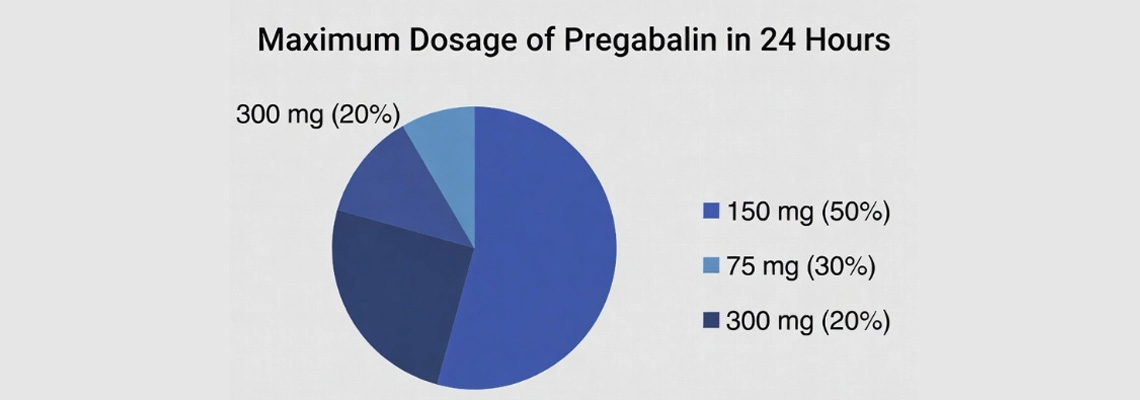
Maximum Dosage of Pregabalin in 24 Hours
Pregabalin, a widely prescribed medication for neuropathic pain, fibromyalgia, epilepsy, and other conditions, has clearly defined dosage limits to optimize efficacy and minimize risks. The highest safe dose that can be prescribed within a 24-hour period is 600 mg, divided into two or three doses depending on the indication and patient tolerance.[2][6][4][1]
Typical Dosage Ranges by Indication
- Neuropathic Pain: Initial dosing starts at 150 mg per day, increasing up to 300 mg per day within a week if needed. If necessary and if tolerated, the dose can be raised gradually to a maximum of 600 mg per day, divided into two or three doses.[6][4][5][2]
- Fibromyalgia: Maximum daily dose is 450 mg, but up to 600 mg may be tried in some patients with other neuropathic pain conditions if lower doses are not effective.[4][6]
- Epilepsy (Adjunctive Therapy): The effective dose ranges between 150 mg and 600 mg per day, divided into two or three doses.[2][4]
- Generalized Anxiety Disorder (off-label use in some regions): The range is 150 mg to 600 mg per day, titrated based on response and tolerability.[4]
Dosage Titration and Adjustments
- Initiation: Pregabalin is commonly started at a lower dose (e.g., 75 mg two times daily or 50 mg three times daily) to reduce the risk of side effects.
- Uptitration: Dose increases depend on patient response, usually at weekly intervals. For lack of sufficient pain relief with 300 mg daily, the dose may be increased up to 600 mg daily if tolerated.[1][2][4]
- Elderly and Renal Impairment: Dose adjustments are crucial since pregabalin is excreted via the kidneys. Lower starting doses and slower titration are advised.[1][2]
Safety and Efficacy Beyond 600 mg
- Lack of Additional Benefit: Clinical studies have shown that doses above 600 mg in 24 hours do not provide extra benefits but do significantly increase the risks of adverse effects such as dizziness, drowsiness, and confusion.[3][4][1]
- Adverse Effects: Common side effects include dizziness, somnolence, weight gain, peripheral edema, and blurred vision. Tolerability tends to decrease at higher doses.[7][3][6]
Clinical Considerations
- Individualization: Therapy should be tailored to the individual patient. Adequate pain or seizure control may be achievable at doses lower than the maximum, and not all patients tolerate high-end dosing.
- Therapy Monitoring: Regular assessment for both efficacy and side effects is necessary, especially during dose increases.
- Withdrawal: Stopping pregabalin abruptly can lead to withdrawal symptoms including insomnia, headache, and nausea. A gradual dose reduction over at least one week is recommended when discontinuing the drug.[1]
- Renal Function: Patients with impaired kidney function require proportionate reductions in daily dose.[2][4][1]
Special Populations
- Pediatrics: Maximum recommended dose in children (weighing 30 kg or more) is also 10 mg/kg daily, not to exceed 600 mg per day.[1]
- Elderly: Usually require lower doses due to reduced renal clearance and increased susceptibility to CNS side effects.[4][2][1]
Key Takeaways
- The maximum dose of pregabalin for adults in 24 hours is 600 mg, divided into 2–3 doses for various approved conditions.[5][2][4][1]
- Doses higher than 600 mg do not offer greater therapeutic benefit and elevate the risk of side effects.[3][2][1]
- Dosage regimens must be individualized based on patient factors including renal function, age, and clinical response.[2][4][1]
- All dose titrations and therapy withdrawals should be gradual to prevent adverse effects.[1]
Disclaimer: This information does not substitute for medical advice. Always consult a licensed healthcare professional before starting, changing, or stopping any prescription medication.
How We Reviewed This Article
- https://www.medcentral.com/drugs/monograph/93954-305048/pregabalin-oral
- https://www.ncbi.nlm.nih.gov/books/NBK470341/
- https://www.healthline.com/health/pregabalin-oral-capsule
- https://www.medicines.org.uk/emc/product/7132/smpc
- https://www.mayoclinic.org/drugs-supplements/pregabalin-oral-route/description/drg-20067411
- https://www.mypcnow.org/fast-fact/pregabalin-in-palliative-care/
- https://www.medicalnewstoday.com/articles/322429
- https://shmpublications.onlinelibrary.wiley.com/doi/full/10.1002/jhm.13090
- https://pmc.ncbi.nlm.nih.gov/articles/PMC4110876/
- https://www.wscubetech.com/blog/meta-title-description-length/